
Category: Treatments

Headache

Nearly 40 million Americans experience chronic headaches. The problem is severe and sometimes disabling for half of these people. There are only a few structures in the head that hurt. These consist of the skin, the muscles and the blood vessels. The brain itself lacks pain sensitive nerve fibers. Most chronic headaches come from the muscles or the blood vessels. Headaches can be an early warning symptom that something serious is wrong such as a tumor or brain infection.

Diagnosis

When a patient first sees a doctor complaining of a headache, it is the doctor’s responsibility to make sure nothing serious is going on. The doctor will take a careful history and do a thorough physical and neurologic evaluation. If there is some doubt as to the nature of the headaches, the doctor may order blood work and X-ray studies. A test called an encephalogram (EEG) can be used to measure brain activity and rule out the possibility of epilepsy. The primary X-rays used in evaluating the head are the CAT scan and the MRI. Sometimes dye is injected through the vein prior to a CAT scan or MRI to enhance the pictures further. On the basis of the history, physical examination and radiographic tests, the physicians are almost always able to determine abnormalities in the brain. The vast majority of patients will not have headaches secondary to tumor, infection, etc. These patients will have what is referred to as chronic benign headaches. There are two primary types of benign headaches: migraines which are vascular headaches, and muscle tension headaches.

Migraine Headaches

The most common vascular headache. They are usually characterized by:

  • A so-called aura prior to the migraine 
  • Confusion
  • Eyes  experience  flashing  lights  or zigzagging lines
  • Nausea
  • Occasional disturbed vision 
  • Sensitivity to light 
  • Severe pain on one or both sides of head
  • Speech difficulty
  • Temporary loss of vision
  • Tingling of the face or hands
  • Vomiting
  • Weakness in the arms or legs

It is during this phase the blood vessels supplying the brain are believed to be constricting. Because of the low blood flow, neurological findings described above develop. This can occasionally be confused with a stroke-type process.  The difference is the symptoms remain in a stroke while symptoms quickly dissipate over a period of 30 to 60 minutes with a migraine. Migraine headaches can come at almost any time and with any frequency. However, most patients suffer severe migraines one to two times a week or less.

Migraine Progress: There is some debate as to the precise cause of migraine headaches, but it is: mainly believed the blood vessels constrict and get very tight due to various triggers. When this happens, blood elements called platelets clump together and release a drug called serotonin. Serotonin causes the blood vessels to further tighten and reduces the supply of blood to the brain. This can give rise to the distorted speech or vision commonly seen with migraines. Ultimately, the same blood vessels that are constricting, dilate and widen in order to re-establish proper blood flow to the brain.  Because the brain has been deprived of blood for a period of time, the blood vessels open extra wide in order to make up for the blood flow that was initially denied. It is during this dilation process the pain is experienced. Additionally, during this phase, chemicals that cause irritation and swelling are also released, resulting in the throbbing headache. Migraine headaches can begin anywhere between the age of 5 and 35 and are more common in women. Women may also suffer from menstrual migraines, which are headaches that appear around the time of their menstrual period and may disappear with pregnancy.

There may be numerous triggers to a migraine headache such as:

  • Alcohol in any form
  • Certain foods (foods high in tyramine should be avoided)
  • Changes in the weather
  • Fatigue
  • Flickering lights
  • Genetic predisposition
  • Stress

Treatment: The classic treatment for migraine headaches is drug therapy. There are two approaches to the medications:  

  • Prevent  the  headaches
  • Relieve  the symptoms.  For infrequent migraines, drugs can be taken at the first sign of a headache to help ease the pain and stop the attack. These include:
    • Anti-inflammatory drugs such as aspirin or Naprosyn Vasoconstrictive drugs such as ergot alkaloids and sumatriptan
  • If the headaches are occurring frequently, that is three or more times a month, preventative treatment is usually recommended. Drugs to prevent the classic migraine include:
    • High blood pressure medications, which help reverse constriction of the blood vessels (beta blockers and calcium channel blockers)
    • Anti-depressants (amitriptyline)

New drugs for migraines are being released all the time and your doctor will be aware of them.

Muscle Contraction Headaches

These are generally related to stress, which induces muscle tension. However, other studies now suggest muscle tension and vascular headaches may be one and the same. Chronic muscle contraction headaches, unlike migraines, can last weeks, months or sometimes years. These headaches are described as a tight band around the head with pain that is steady and is usually felt on both sides of the head. The muscles of the head are frequently painful to light touch; combing the hair can even be painful.

Treatment: Treatment of muscle contraction headaches is similar to migraines. The first consideration is to try to relieve the headache with anti-inflammatory drugs. In addition, preventing the headaches with the same medications used for migraine patients is reasonable. Non-drug therapy for chronic muscle contraction headaches includes biofeedback, relaxation training and counseling. Biofeedback is a technique that gives people better control over their body functions, such as blood pressure, heart rate, muscle tension and brain waves. By learning this technique, patients are able to  reduce stress and relax the muscles in the head and even open up blood vessels. This technique is ideal because it does not require the use of any medications and has no side effects. Patients can practice it at any time and when they feel a headache starting. In order to learn biofeedback, the patient must see an experienced biofeedback practitioner and practice at home with a portable monitor. Biofeedback is helpful for both types of headaches. Sometimes headaches may respond to  hot showers or moist heat placed to the back of the head or neck. In certain patients, ice may be more effective. Physical therapy, massage and gentle exercise of the neck may also be helpful. Ultimately, patients who have chronic headaches can live normal, active lives. Working with the doctor, a good program of medications, behavioral interventions and proper diet to reduce the frequency, severity and duration of headaches can be developed.
Reflex Sympathetic Distrophy

Reflex sympathetic dystrophy is a syndrome that may develop when the body has been injured. This injury can result from a motor vehicle accident, a gunshot wound, an accident around the house or even after surgery. Any sort of wound can result in reflex sympathetic dystrophy. Normally, the nerve signals pain when the body is injured. This causes a reflex, which makes the body pull away from the painful stimulus. The blood vessels will then protect the body by constricting to reduce blood loss. In patients without reflex sympathetic dystrophy, these responses gradually disappear, blood vessels open up, the fear and suffering decreases and the body takes appropriate actions to heal the wound. In patients with reflex sympathetic dystrophy, however, the body never gets quite back to normal. The nerves stay hyperactive causing increased pain because of continual blood vessel spasms. This tightening of the blood vessels causes swelling of the limb, discoloration and increased pain.  This pain from the reduced blood flow keeps the nerves excited, which then keeps the blood vessels tight and continues in a cycle. Increased pain and reduced blood flow are the hallmark of this disorder.

Diagnosis

The patient will note hypersensitivity. Patients with reflex sympathetic dystrophy do not like the limb being touched at all and will seek to protect it from even casual encounters or the wind. The slightest touch can be interpreted as pain. The doctor will note objective changes in the limb such as discoloration and increased sweating. The limb will feel two degrees cooler, the pain will increase in cold weather, and there may be alterations in the appearance of the hair on the limb. In addition, the skin becomes shiny, the bones lose their calcium and nail growth may change in appearance. X-rays and bone scans can help demonstrate reduction in blood flow and reduction of calcium in the bones. Overall, the limb may appear to be wasting away. This wasting is called dystrophy and develops as a consequence of low blood flow. In late stages of RSD, the hand or foot becomes withered and nonfunctional, virtually a useless appendage.

Treatment

Reflex sympathetic dystrophy is divided into three stages. Stage one is the least severe and three is the most severe. Depending on the stage, the treatment will vary.

Stage One: There may be some slight swelling, hypersensitivity and occasional discoloration following an injury. The skin will appear normal and there will be a minimal loss of calcium from the bones. Patients in this stage are very treatable with a combination of medications, injections and physical therapy. Neurontin is the medication of choice given to decrease activity in the overactive nerves. Other medications may be used as well to help open the blood vessels. Physical therapy is important to keep the limb from wasting away and also to decrease the sensitivity in the limb. A skilled physical therapist can design a program to help the limb recover. It is important that the nervous system returns to normal. This can be done with a sequence of nerve blocks that can help treat the underlying condition by interrupting the reflex arc of pain in the nervous system. The nerves are temporarily put to sleep with a local anesthetic causing them to forget the memory of the injury. Usually nerve blocks are given as a sequence of 3 to 10 injections.

Two: Significant wasting of the limb occurs. Calcium is very low in the bones, the skin is shinny and the blood vessels are in significant spasm all the time. Surgery becomes an option to permanently interrupt the nerves so the blood vessels can open and nourish the limb. The nerves can also be injected with drugs to permanently disrupt their function. Another alternative is the placement of a spinal stimulating device. This can interrupt the nerves without destroying them and help reverse the changes of stage two sympathetic dystrophy. In addition, another alternative is the placement of a morphine or local anesthetic pump for temporary or permanent use in order to decrease activity in the nerves.

Three: The tendons and muscles have wasted away and the limb cannot be used at all. The bones are virtually demineralized and the skin is very shinny. Unfortunately, in stage three, there is no treatment. Cutting the nerves or treating the patient with spinal narcotic infusion or with spinal stimulation will not cause the limb to regenerate. Fortunately, in this day and age, with the development of advanced pain management centers, few patients progress to stage three.

Download the information sheet in pdf

Abdominal Myofascial Pain

Understanding Abdominal Myofascial Pain: Symptoms, Causes, and Treatment

What is Abdominal Myofascial Pain?

Abdominal Myofascial Pain (AMP) is a chronic pain condition caused by trigger points in the abdominal muscles and fascia. These knots in the muscle tissue can lead to localized pain, referred pain, and muscle dysfunction. Unlike gastrointestinal disorders, AMP is not related to organ dysfunction but rather muscle and connective tissue dysfunction.

Symptoms of Abdominal Myofascial Pain

  • Persistent or intermittent abdominal pain
  • Tender spots (trigger points) in the abdominal muscles
  • Pain that worsens with movement, pressure, or certain postures
  • Referred pain to the back, pelvis, or ribs
  • Digestive discomfort (due to abdominal muscle tension)

Causes and Risk Factors

  • Chronic muscle tension or overuse
  • Poor posture
  • Surgery or trauma (including C-sections or abdominal surgeries)
  • Repetitive movements or heavy lifting
  • Stress and anxiety (leading to muscle tightness)

Diagnosis and Treatment

Diagnosing AMP involves a physical exam, where a doctor or physical therapist identifies trigger points in the abdominal muscles. It is often misdiagnosed as IBS, gastritis, or other digestive issues, leading to unnecessary treatments.

Effective treatments include:

  • Trigger point therapy (massage or dry needling)
  • Myofascial release
  • Physical therapy
  • Posture correction
  • Heat therapy
  • Stress management techniques

When to Seek Help

If you have chronic abdominal pain that hasn’t improved with conventional treatments, consider consulting a physical therapist or pain specialist who understands myofascial pain syndromes.

Final Thoughts

Abdominal Myofascial Pain is often overlooked but can be successfully treated with manual therapy, movement modifications, and stress management. Proper diagnosis is key to avoiding unnecessary medications and invasive procedures.

Bursitis

Bursitis

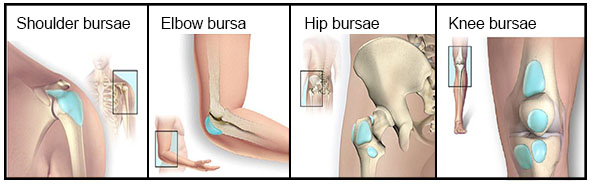
Certain areas of the musculoskeletal system experience significant stress from everyday living. Fluid filled sacs, called bursae (bursa) cushion the bones, tendons and muscles near your joints. Unfortunately bursae can become inflamed and irritated and this is call bursitis. Bursitis often occurs near joints that perform frequent repetitive motion. The most common sites for this to occur are the hips knees, shoulders and elbows.

Diagnosis

The patient with bursitis will complain of well-localized pain in the shoulder, hips or other joints. The pain may travel from one of these areas into the arm or thigh. When the doctor examines the patient, he or she will look for swelling and tenderness over the locations of the bursa.  Doctor can often diagnose bursitis based on the medical history and physical exam. If further testing is needed, the doctor my order x-rays. X ray images can’t positively establish the diagnosis of bursitis but they can help to exclude other cause of your discomfort. The bulk of bursa inflammation occurs in the soft tissue, which cannot be seen on X-ray.

Treatment

There are many treatment for bursitis. In the early stages, an anti-inflammatory drug will frequently help the problem. Ice should can also be applied over the inflamed area several times during the day to assist with swelling.  It is important to rest the affected area. For example, avoid elbow pressure by not leaning on the elbow or if the right hip is affected, try to sleep on the left side.  If these treatment strategies fail to work, the doctor may inject an anti-inflammatory drug and /or corticosteroid directly and into the bursa. These drugs are very useful for the relief of inflammation. These drugs generally bring rapid pain relief and in many cases, one injection is all you need. Although if more than one injection is needed, these medications can only be used a few times each year. Physical therapy may be ordered to strengthen the muscles in the affected area to ease pain and prevent recurrence. The physical therapist may use ultrasound and soft tissue manipulation that can sometimes be helpful. Sometimes an inflamed bursa must be surgically drained.

Download the information sheet in pdf

Peripheral Neuropathy

Peripheral neuropathy is a burning or aching pain due to nerve diseases. The pain can either be constant or intermittent and most often occurs in the arms or legs; however, it has been known to occur in the trunk, abdomen, head and neck. The pain can occur from irritation of one nerve or from several nerves. Generally, peripheral neuropathies are a consequence of diabetes, alcoholism or other neurological diseases.

Diagnosis

Doctors will use a physical examination to confirm the area involved. Neurological examinations can sometimes reveal loss of sensation to pinprick or to hot and cold temperatures. Weakness is sometimes noted in the affected extremity. Reflexes may be affected and there may be changes in the skin over the region. Evaluations of peripheral neuropathies usually involve tests appropriate for the primary disease, which doctors suspect is causing the problem such as diabetes. Evidence of nerve damage can sometimes be demonstrated with electrical nerve testing. Doctors who treat the pain as peripheral neuropathy will often use a nerve block procedure to help diagnose the problem.

Treatment

For some patients with peripheral neuropathy, the use of oral non-steroidal anti- inflammatory medications along with traditional pain medications can be helpful. For others, special medications help directly with nerve pain. These medications are often started at low doses and gradually increased until the desired affects are reached. Long-term relief can often be obtained with the use of therapeutic nerve blocks. These include injections of anesthetic medications along with anti-inflammatory medication around the painful nerves. The injections are usually performed in a short series over several weeks until symptoms subside or a plateau is reached in the treatment. If helpful, these injections can be repeated at appropriate intervals.

Nerve stimulation techniques can be helpful in certain types of peripheral neuropathy. Stimulation can either occur on the skin over the affected region, or in some cases, with stimulator electrodes placed surgically around the nerves or in the spine at the origin of the affected nerves. Although physical therapy is not usually helpful in relieving the pain from peripheral neuropathy, therapeutic exercises can help restore loss of function and allow patients to lead more active lives. In addition, behavioral modification techniques or biofeedback training with muscle relaxation exercises can help patients be less sensitive to the irritation from the affected nerves.

Download the information sheet in pdf