Posted on June 19, 2017 by SMPC - Treatments
Orthobiologics represent an innovative group of cellular based non-surgical therapies that naturally reduce inflammation and promote a faster, more robust healing of damaged tissue. At their core is the utilization of the body’s powerful natural ability to naturally heal and renew itself. Through orthobiologics, physicians now have the means to harness and intensify that natural healing power and apply it in high concentration to stimulate advanced healing, reduce pain and improve function.
Platelet-Rich Plasma Therapy (PRP)
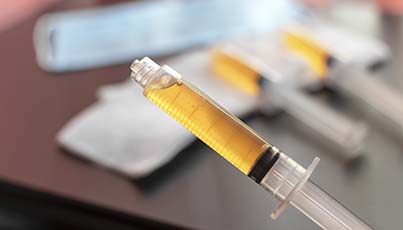
Platelet-rich Plasma Therapy or PRP, is an advanced orthobiologic treatment option that uses the patient’s own blood components to stimulate the body’s natural healing process in the damaged or injured area causing pain. The therapy centers around drastically enhancing the concentration of platelets found circulating in our blood stream to boost the natural biological healing powers of the body. It is a treatment option that is indicated for injuries or damage to tendons, ligaments, muscles and joints.
How does the PRP process work?
- Your health care provider will collect a small amount of blood. This sample then goes through a rapid spinning process that separates and concentrates the platelets and other beneficial growth factors from the blood. The entire PRP production process is usually done in less than 30 minutes.
Am I a candidate for treatment?
- Speak with your physician and ask if this treatment is right for you. Your provider will perform an examination to decide if this therapy will benefit you. If you are taking anti-inflammatory medications or blood thinners, your physician may temporarily discontinue the use of these medications until your treatment has taken place.
What are the risks associated with this treatment?
- Platelet rich plasma therapy utilizes your body’s own natural properties to treat your injury. Side effects from platelet rich plasma treatment are very uncommon.
Posted on April 27, 2016 by SMPC - Treatments
Southern Michigan Pain Consultants uses a variety of methods to treat different conditions. Here is a list of our most frequently used treatments:
- Injection Therapy
- Nerve Block Technique
- Radiofrequency Lesioning
- Kyphoplasty
- Spinal Cord Stimulator Trial
- Disography
- Platelet Rich Plasma Therapy
- Physical Therapy (offered at our Portage location)
Posted on April 27, 2016 by SMPC - Painful Conditions
Southern Michigan Pain Consultants treats a variety of different painful conditions. The list below contains descriptions of many of the conditions that we treat.
If you don’t see the condition you are looking for please call us at 269-266-3104, we may still be able to help.
Posted on April 27, 2016 by SMPC - Treatments
A Physical Therapist is educated to understand the interaction of all the body parts. With this knowledge, they begin with a thorough examination to diagnose the problem and begin treatment. A Physical Therapist teaches you how to improve your body awareness. Manual therapy combined with therapeutic exercises helps you to relax better, and move more freely for longer periods. SMPC’s Physical Therapist Laythen Young advises on proper posture & body movement at home and in the work place, treating injuries, consulting on fitness, strength and endurance training. Ask your Pain Specialist if your pain management program should include PT.
The following list contains a few of the most common ailments PT can treat:
- Neuromusculoskeltal pain and dysfunction
- Neck & Back pain and dysfunction
- Pelvic pain and dysfunction
- Upper extremity pain and dysfunction
- Lower extremity pain and dysfunction
- Jaw pain and headache
Goals of Physical Therapy:
- Relieve pain and discomfort
- Decrease Impairment and dysfunction
- Improve or maintain function
- Prevent or minimize disability
- Educate the patient to be effective in self management
Posted on April 13, 2016 by SMPC - Painful Conditions
The spinal column is composed of a series of 24 bones called vertebrae that are separated from each other by a disk. Spondylolysis is defined as a condition that occurs when all or part of one vertebra has slipped onto another vertebra. This most often occurs in the lower back and can cause a person to experience low back pain that may spread into the back part of the thigh or lower leg.
It is unlikely that the disorder is the result of a single incident, but rather it develops gradually over time. Patients are likely to note the pain improves with extension, or straightening, of the spine and is made worse by flexing, or bending forward, at the waist. The pain can be present most of the time, however, occasionally rest may improve the symptoms. Unfortunately, severe flare-ups may strike at any time.
Diagnosis
During a physical examination, doctors may find an unnatural curve to the lower back along with changes over the involved vertebra. Doctors may feel tightness in the muscles of the lower back overlying or adjacent to the vertebra involved. The patient’s range of motion at the waist is limited and associated with increased pain. In most cases, X-rays of the lower back will confirm the condition and locate the source of the slippage. A bone scan can be helpful in finding small fractures that may not appear on plain X-rays, or to evaluate whether infections or tumors in the spine may be causing the pain. If a pinched nerve is suspected, a MRI examination may be performed. Doctors may also use certain kinds of nerve block procedures, which involve the injection of anesthetic medicine around painful structures in the spine. These injections can help confirm the diagnosis and determine if further nerve block treatments will benefit the patient.
Treatment
Some patients find benefit from the use of nonsteroidal anti-inflammatory medications in addition to pain medications. Many patients find nerve block treatments to be extremely effective in helping to reduce the pain from spondylolysis over longer periods of time. These injections may reduce pain caused by irritation at the nerve root, which is where the spinal cord starts to branch out. This can help reduce the spread of pain to adjacent structures. Other injections around the joints of the lower back can help reduce pain associated with movement.
For other patients who have a strong degree of muscle irritation or spasm associated with their spondylolysis, injections of nerve branches in the muscles adjacent to the spine can help relieve symptoms. Doctors may suggest the use of therapeutic exercises to improve strength and flexibility, and assist in improving the patient’s abilities to perform more of their daily life activities with less discomfort. Occasionally a corset can help during strenuous activity.
Doctors usually reserve surgery for the most extreme cases and if needed, they will fuse the vertebra if all else fails.
Download the information sheet in pdf